Stan
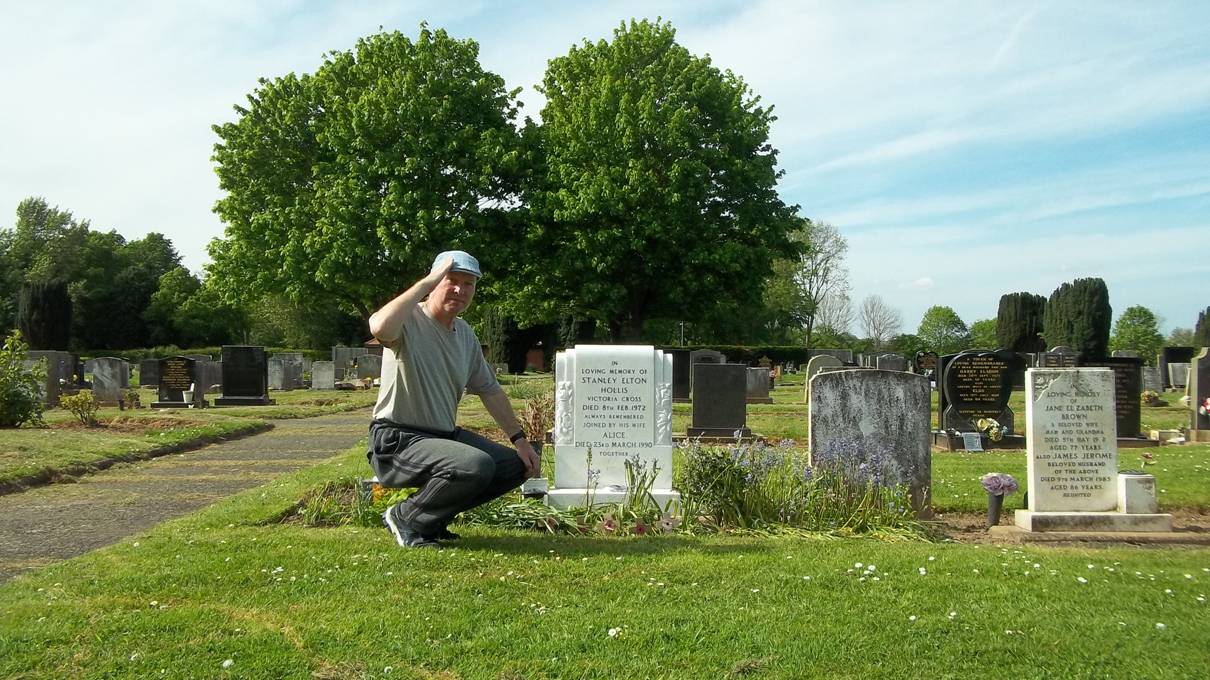
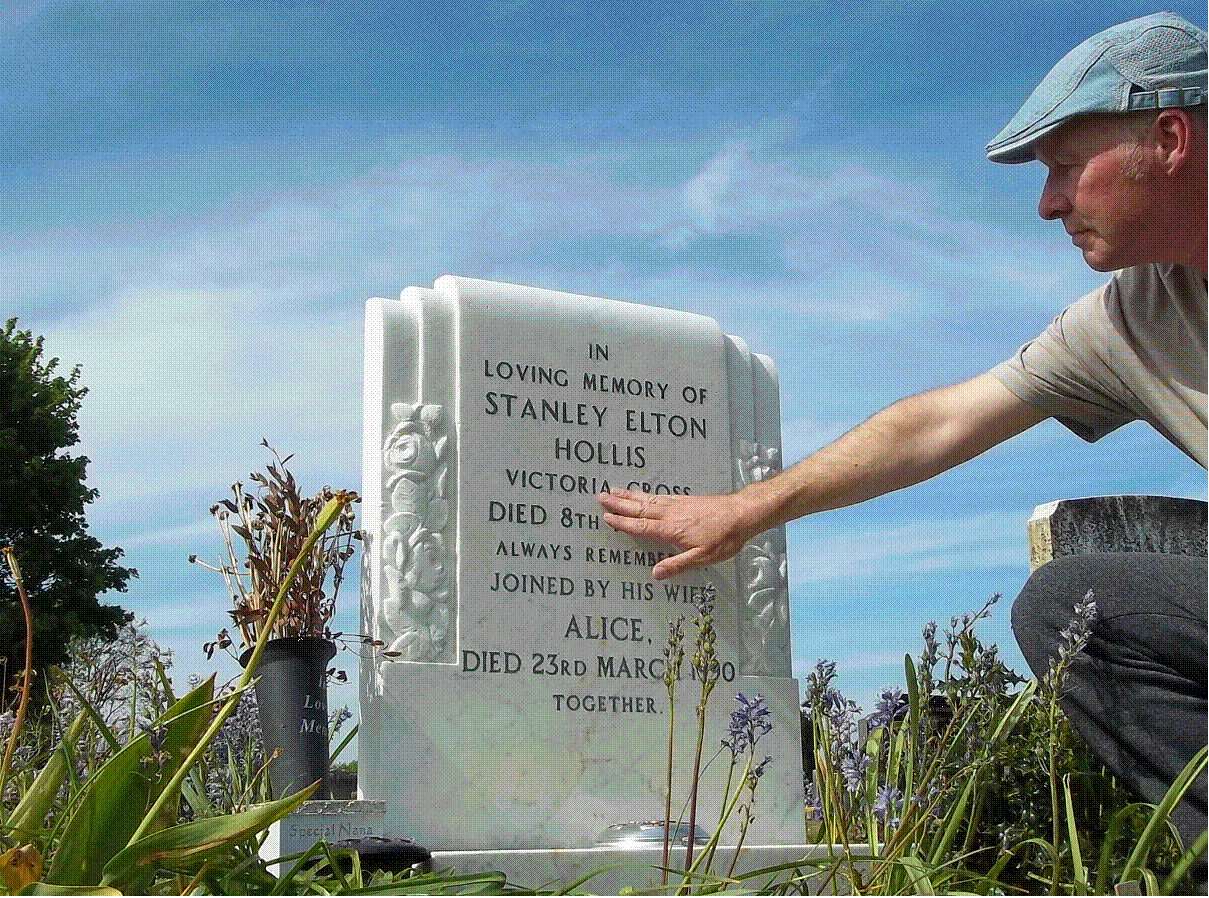
Hollis VC grave (21st September 1912 to 8th February 1972)
Here I am by the grave of the
only man to win a Victoria Cross on D-Day. Despite it being 80 years since
D-Day there was no red wreath to recognize his bravery.
Stanley was born in Middlesbrough (where the
grave lies) but when he was 14 his folks moved to Robin Hood’s Bay where they
ran a fish and chip shop. Aged 18 he joined the Whitby Shipping Company and
trained as a Navigation Officer sailing the routes to Africa. He contracted blackwater fever and was so ill he had to come home. He
moved to Middlesbrough and drove lorries. He married Alice with whom he would
go on to raise a son and a daughter.
After the outbreak of World War Two he signed on
for War Service and went to France in April 1940 to work as a despatch rider.
He exuded an air of a leader and was promoted to Sergeant. He went on to see
action in the Western Desert and in the invasion of Sicily but November 1943 he
was back in the UK prepare for the invasion of France.
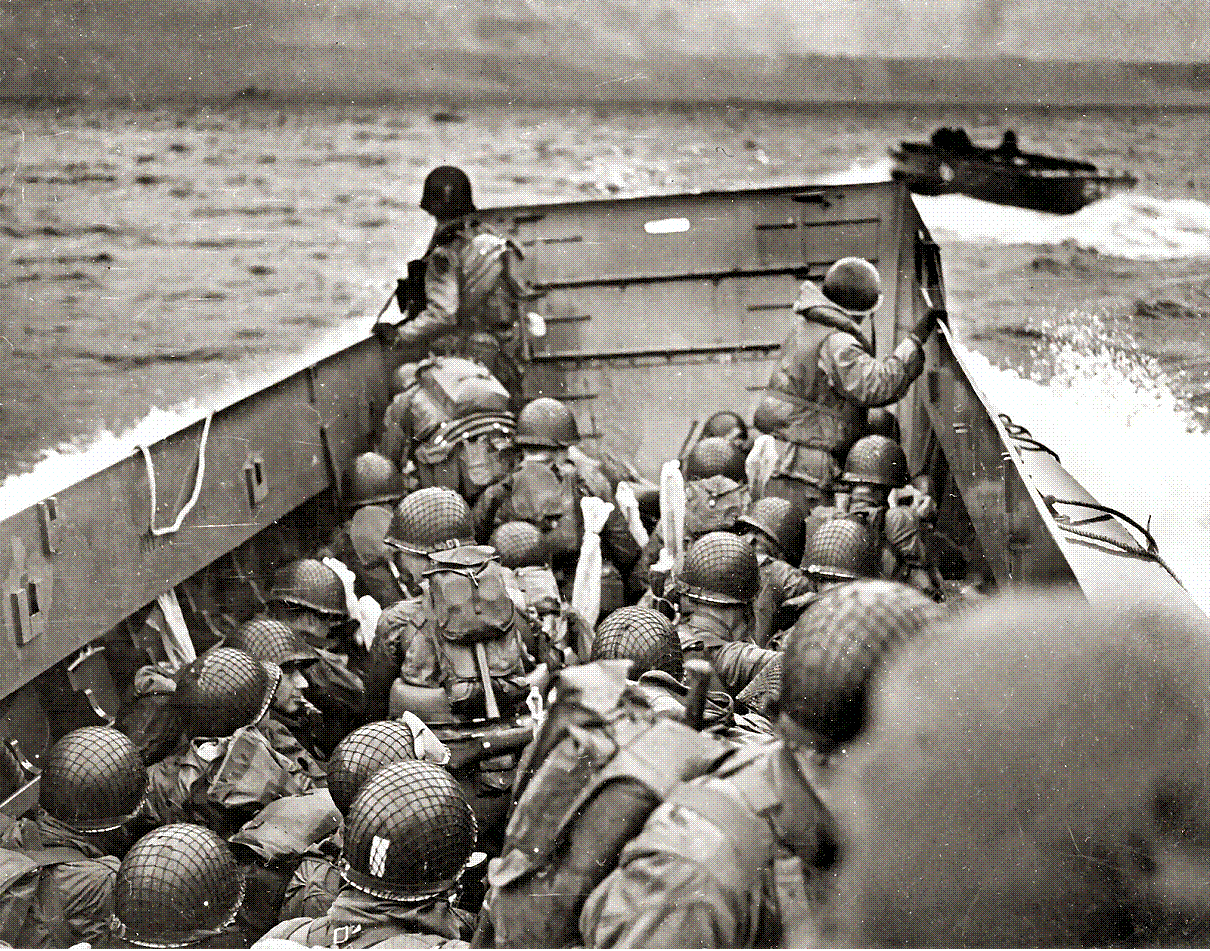
On Tuesday 6th June 1944 31-year-old Stan - along
with the 6th Battalion - climbed into their landing craft and headed for the
Gold beach on Normandy coast. Landing on the beach they advanced across the
sand and headed inland. Their objective was to take over a strong German
artillery position called the Fleury Battery in the
village of Ver-sur-Mer a few lanes deep into Normandy.
On reaching the village they found the battery was protected by a series of
pillboxes (concrete fortified structures housing machine guns.) Stan went to
investigate but was spotted and the Germans turned their guns on him. Somehow
they missed when he charged forward firing his Sten
gun from the hip as he ran. He expected a hail of bullets to cut him down but
somehow he made it to the pillbox and climbed on top of it. He tossed grenades
in through the gun slits and then kicked in the door. Only one surviving German
soldier had survived the blast and Stan took him prisoner. He then followed a
communication trench that led to a second bunker and also attacked that bunker
taking 25 prisoners.
Later that day the Battalion moved to Crepon village and Stan was ordered - with two others - to
investigate reports of a German artillery gun firing from within a farmhouse.
They crept across fields and found the farmhouse. They fired at it with a
anti-tank rifle but the bomb landed short giving their position away. The
Germans opened fire and Stan managed to get clear. Hearing that two of his men
had been left behind trapped in the house he told his commanding officer, "I took them in. I’ll try to get them out."
He sprang out into the open firing his Bren gun continuously and expected to be
bayoneted to death or cut down by bullets sprayed from a machine gun. He was
wounded but not seriously and the trapped men escaped unharmed. Due to their
actions to 6th battalion got further inland into Normandy than any allied unit.
In September 1944 he was wounded for the fifth
time and evacuated to England where he was decorated with the VC by King George
VI in October 1944. Having been wounded and suffering from the after-effects of
malaria he left the Army for good. He got a job as a lorry driver and married
Alice Clixby with whom he had a son Brian and
daughter Pauline. Later he ran The Albion Pub in North Ormesby.
Over the years he had many writer’s knocking on
his door wanting tell his story but he said, “anyone would have done what I
did”. He said he was a leader and it was his job to get any men out of any
situation he got them into. He rarely spoke of his brave actions and was
smiling grandad to his grandchildren. He died aged
59, robbed of another thirty years of life. I did a salute and left.