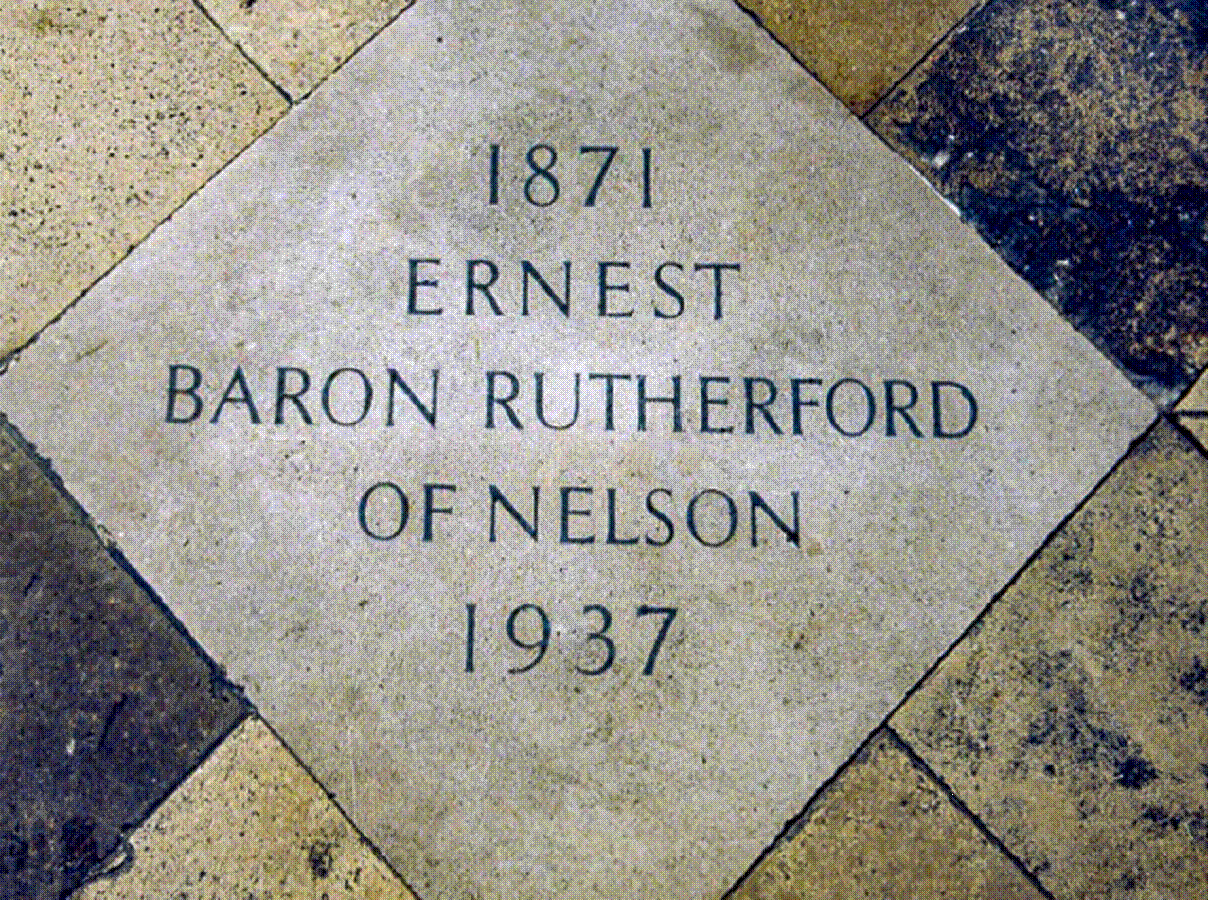
Ernest Rutherford (30th August 1871
to 19th October 1937)
Few achievers are considered precious enough to find their final
resting place is in Westminster Abbey. Ernest was known to be the “father of
nuclear physics” and his ashes were buried there. He was knighted and awarded
the Nobel Prize in 1908 for changing the face of nuclear physics. Here I am
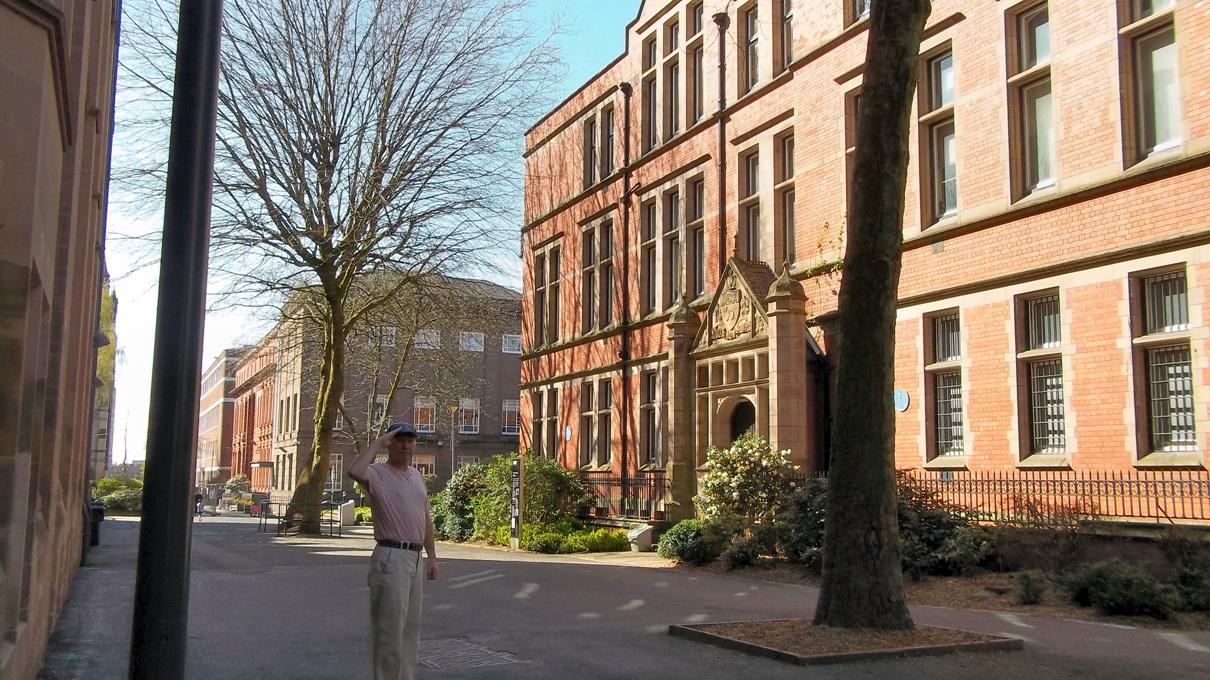
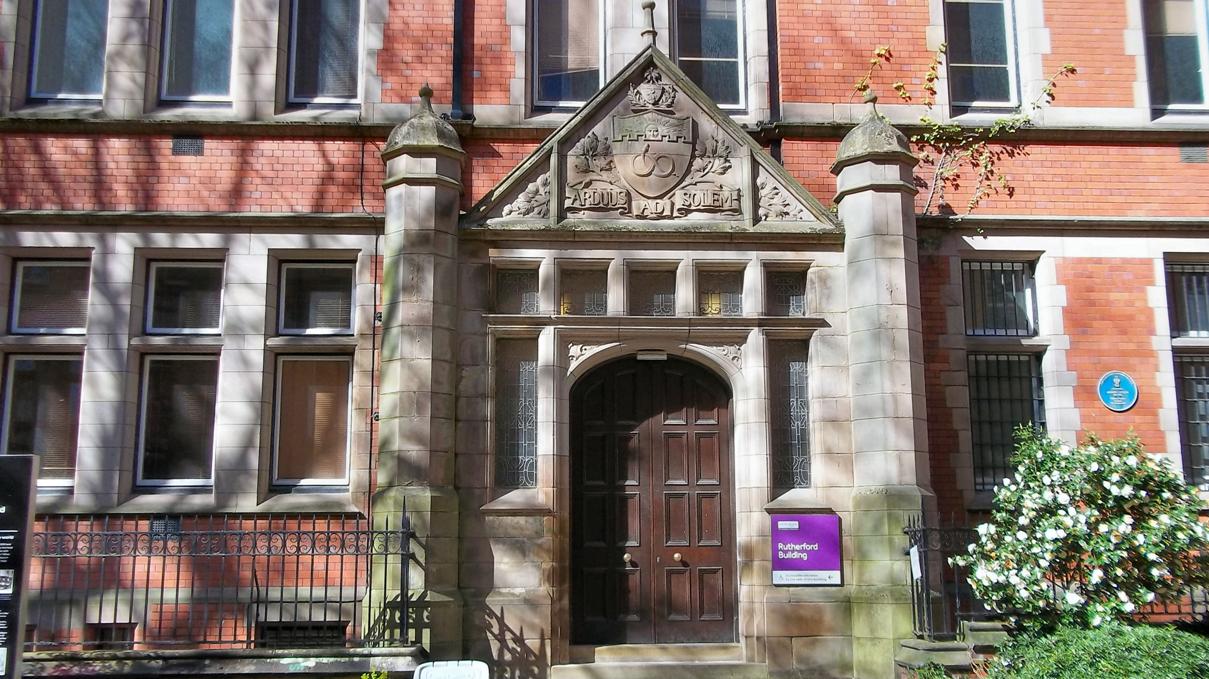
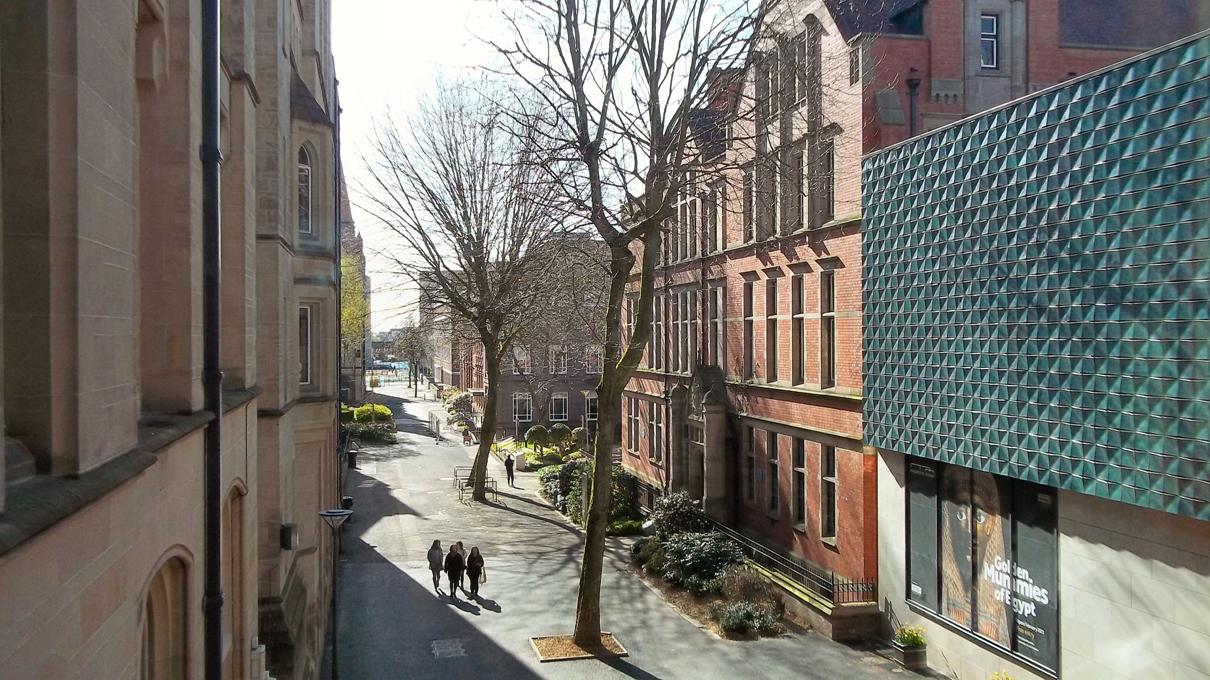
outside the Rutherford Building on the sprawling campus at Manchester
University where he split the atom.
He was one of twelve children and born on a farm in New Zealand. With
enviable intelligence and hard work he gained a double major degree in
Mathematics and Physical Science. A science scholarship propelled him to attend
Trinity College in Cambridge. Aged 27 he moved to Canada to work at a
university but returned to England nine years later in 1907. He accepted an
academic job at the University of Manchester. His scientific experiments were
to change the face of physics and he was awarded the Nobel Prize in Chemistry
in 1908 for his model of the atom.
Ernest was just 43 when he was knighted in 1914 (aged 60 he was made
the first Baron Rutherford of Nelson, which allowed him to join the House of
Lords.) Away from the laboratory he had got married aged 29 to Mary Newton (who
he met in New Zealand) and they had a daughter. He held strong anti-Nazi views
led him to serve as president of the Academic Assistance Council which helped
German refugees. He also published several books and collected host of medals
and doctorates like people collect beer mats.
Sadly he was just 66 when he died suddenly. For many years he’d had a
small hernia which he neglected to have fixed. It became strangulated causing
him to be violently ill and he was rushed to hospital for an operation. Four
days later he died of "intestinal paralysis" (where the muscles
contractions which move food through your body seize up.) His ashes were buried
in the nave of Westminster Abbey near those of Sir Isaac Newton.
Here I am outside the building where that seminal atomic work
happened. It’s still a university building an sits among others within the
labyrinthine groves of academia that make up Manchester University. I visited
on a sunny Sunday afternoon and it was busy. I had to wait for a time when
there was nobody passing the place to take uncluttered photographs.
Nowadays “splitting to atom” is used to explain the non-importance of
something but in reality it’s a complex and dangerous thing to do and was done
here by Ernest and another physicist called John Cockroft. In this building
they helped advanced us progress from the atomic age to the nuclear age. When you
force a atoms are broken up they release energy in the form of heat and
radiation. All nuclear plants are based on this process on a grand scale to
generate energy.
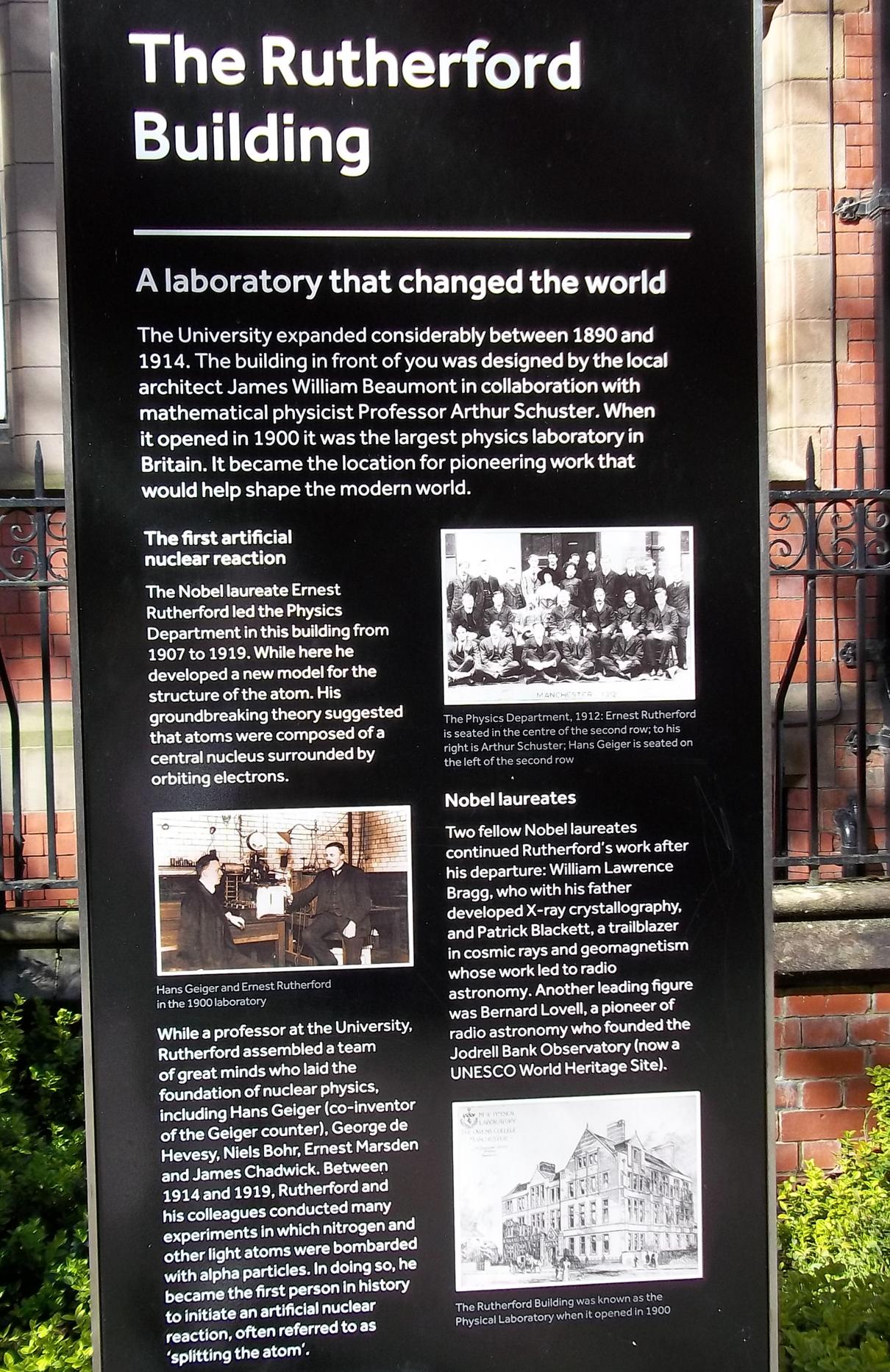
If the blue plaque dedicated to Ernest is not suffice there’s an
information board telling readers what happen on the other sides of the bricks
in that building. I did a salute and left.




His ashes are buried here in
Westminster Abbey...